
 59
59  0
0 What Makes a Website SEO-Friendly During Development?
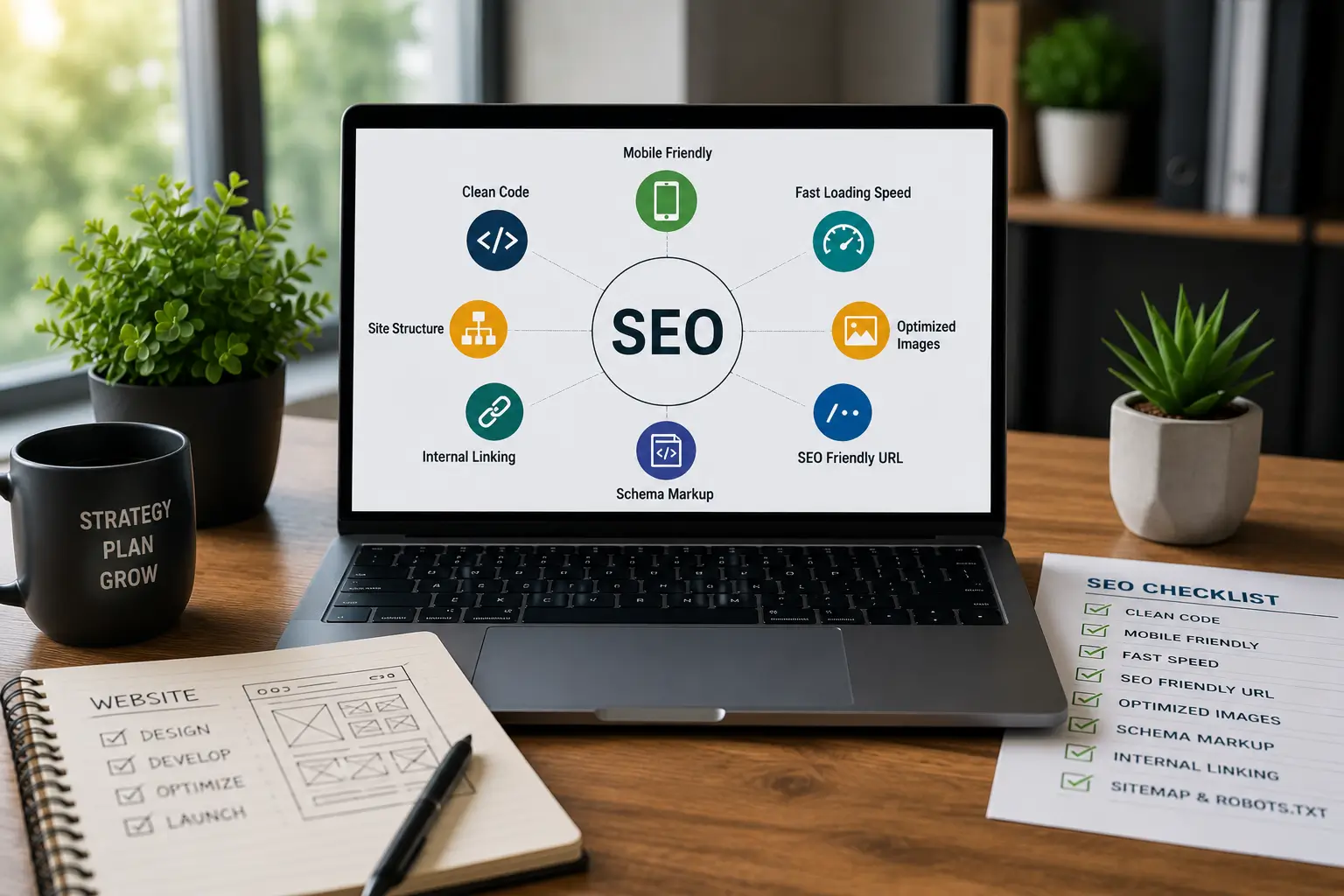
An SEO-friendly website is not created only by adding keywords after launch. Many important SEO elements depend on how the website is planned and developed. Clean structure, fast loading speed, mobile responsiveness, internal linking, technical setup, and user experience all play an important role in search visibility.
That is why SEO-friendly website development should start from the planning stage itself. When design, development, speed, content structure, and SEO are handled together, the website gets a stronger foundation for long-term growth.
Clean Website Structure
A website should have clear navigation, proper page hierarchy, and logical internal links. This helps both users and search engines understand the most important pages on your website.
For example, your main service pages, blog articles, portfolio, contact page, and industry pages should be connected naturally. A clean structure makes the website easier to browse and also helps search engines crawl the content more effectively.
Proper Heading Structure
Each page should use headings in the right order. A clear H1, supporting H2 sections, and relevant H3 sub-sections make the content easier to read and crawl.
Good heading structure also improves content clarity. When users scan the page, they should quickly understand what the page is about, what services are being offered, and what action they should take next.
Fast Loading Speed
Speed is important for user experience. Optimised images, caching, clean code, reduced unnecessary scripts, and good hosting can improve loading performance.
A slow website can increase bounce rate and reduce conversions. During development, the team should focus on lightweight layouts, properly sized images, clean front-end development, and stable back-end development. These technical improvements help create a faster and more reliable website.
Mobile-Friendly Layout
A website should work properly on all screen sizes. Buttons, text, images, forms, and navigation should be easy to use on mobile devices.
Mobile-friendly development is not only about making the website responsive. It also includes readable font sizes, simple navigation, clear call-to-action buttons, and layouts that load smoothly on smaller screens. Professional UI design services can help improve the mobile experience and make the website easier to use.
Clean URLs and Metadata
SEO-friendly URLs should be short, readable, and relevant to the page topic. Each important page should also have a unique title tag and meta description.
For example, a service page URL should clearly describe the service instead of using random numbers or unclear words. Metadata should also be written in a way that explains the page clearly and encourages users to click from search results.
Image Optimisation
Images should be compressed, correctly sized, and use descriptive alt text. This improves performance and also helps search engines understand image context.
Large images can slow down a website, especially on mobile devices. During development, images should be uploaded in proper dimensions, modern formats should be used where possible, and every important image should have meaningful alt text.
Schema Markup and Sitemap Setup
Schema can help search engines understand your content better. A sitemap helps search engines discover important pages more easily.
For service-based websites, schema can be useful for business information, services, FAQs, articles, and contact details. Sitemap setup is also important because it helps search engines find updated pages, service pages, and blog posts faster.
Internal Linking
Internal links connect related pages and distribute SEO value across the website. Service pages, blog posts, case studies, and contact pages should be linked naturally.
For example, a blog about SEO-friendly development can link to SEO services, website design services, CMS integration, and other related services. This helps users explore more useful pages and also gives search engines better context about your website.
CMS and Technical Flexibility
An SEO-friendly website should also be easy to manage. Your team should be able to update content, add new pages, publish blogs, manage images, and improve landing pages without depending on developers for every small change.
A well-planned CMS setup makes this easier. If your website needs custom features, third-party tools, CRM connections, booking systems, or automation, professional API development can also support better functionality and scalability.
Conclusion
SEO-friendly website development starts before the website goes live. When speed, structure, mobile experience, technical SEO, and content planning are handled during development, the website gets a stronger foundation for long-term search visibility.
If you want a website that is fast, easy to manage, and built with SEO in mind, explore ZillionEra’s website development services or contact us to discuss your project requirements.