
 68
68  0
0 Businesses today rely on digital solutions to improve efficiency, automate workflows, and deliver better customer experiences. While every business has unique requirements, successful web applications share a set of core features that improve usability, security, and long-term scalability.
Whether you’re planning to build a customer portal, SaaS platform, business management system, or enterprise application, understanding the essential features can help you make better development decisions.
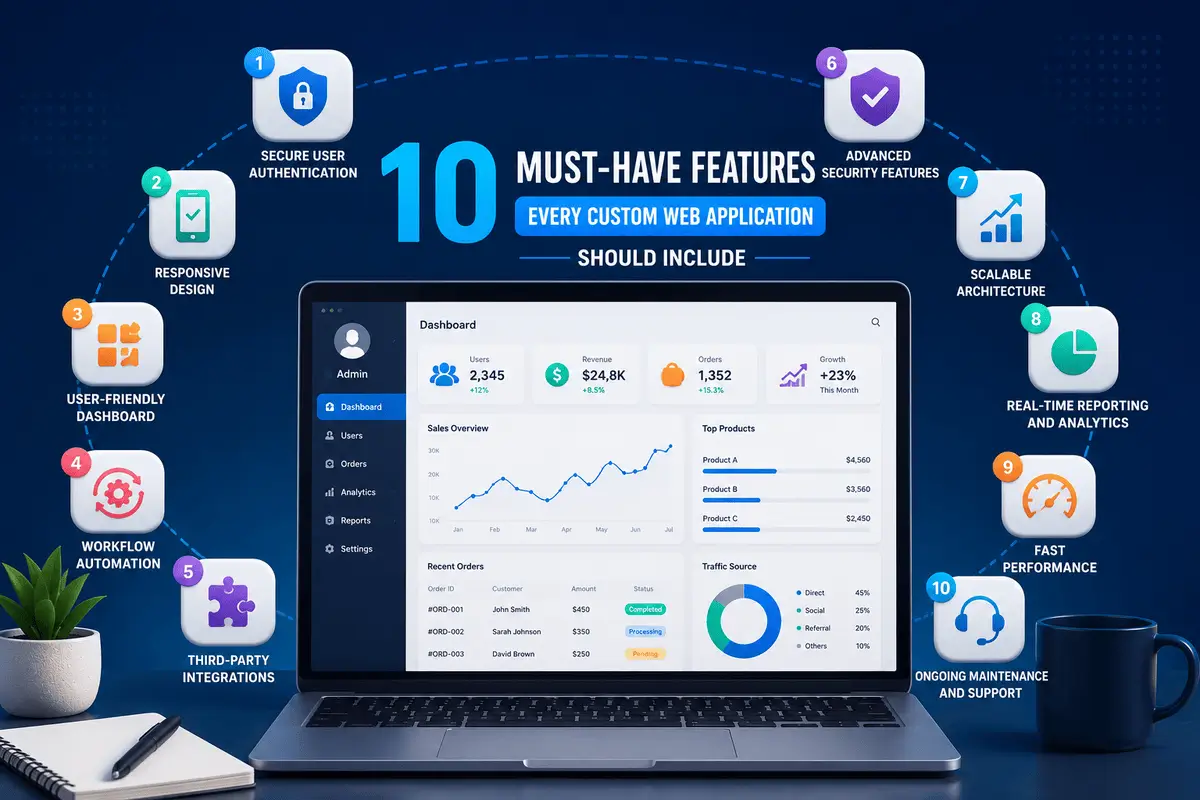
In this blog, we’ll explore the 10 must-have features every custom web application should include to maximize performance and business value.
1. Secure User Authentication
Security should be one of the first priorities when developing a web application. A secure authentication system ensures that only authorized users can access sensitive information.
Essential security features include:
- Secure login system
- Multi-factor authentication (MFA)
- Role-based user permissions
- Password encryption
- Session management
Strong authentication protects both your business and your users from unauthorized access.
2. Responsive Design
Modern users access web applications from desktops, tablets, and smartphones. Your application should provide a consistent experience across all screen sizes.
A responsive web application offers:
- Mobile-friendly layouts
- Faster loading times
- Better accessibility
- Improved user engagement
- Consistent performance on every device
A responsive design also contributes to better search engine rankings.
3. User-Friendly Dashboard
A clean and intuitive dashboard helps users quickly access important information without unnecessary complexity.
An effective dashboard should include:
- Easy navigation
- Personalized widgets
- Quick access to frequently used features
- Visual reports and charts
- Clear action buttons
A simple interface improves productivity and reduces the learning curve.
4. Workflow Automation
Automation reduces manual work and improves business efficiency.
Custom web applications can automate tasks such as:
- Order processing
- Customer communication
- Approval workflows
- Report generation
- Appointment scheduling
- Inventory updates
Automation helps businesses save time while minimizing human errors.
5. Third-Party Integrations
Businesses often use multiple software platforms to manage operations. Your web application should connect with these systems seamlessly.
Common integrations include:
- CRM software
- ERP systems
- Payment gateways
- Accounting software
- Email marketing tools
- Cloud storage platforms
- Shipping providers
Integrations create a connected ecosystem that improves productivity and data accuracy.
6. Advanced Security Features
Beyond authentication, every custom web application should include modern security measures.
Important security capabilities include:
- HTTPS encryption
- Data encryption
- Role-based access control
- Secure APIs
- Activity logs
- Regular security updates
Protecting business and customer data should always be a top priority.
7. Scalable Architecture
Your application should be able to grow alongside your business.
A scalable architecture allows you to:
- Add new users
- Launch new modules
- Expand to multiple locations
- Support higher traffic
- Introduce additional features
Building scalability into the application from the beginning reduces future development costs.
8. Real-Time Reporting and Analytics
Business decisions are easier when supported by accurate data.
A reporting dashboard can provide insights into:
- Sales performance
- Customer activity
- Revenue trends
- Employee productivity
- Inventory status
- Business growth
Real-time reporting enables faster and more informed decision-making.
9. Fast Performance
Users expect applications to load quickly and respond instantly.
Performance optimization includes:
- Optimized database queries
- Efficient application architecture
- Image optimization
- Browser caching
- Content delivery networks (CDNs)
Fast applications improve user satisfaction while reducing bounce rates.
10. Ongoing Maintenance and Support
A successful web application requires continuous improvements after launch.
Regular maintenance includes:
- Software updates
- Performance optimization
- Bug fixes
- Security monitoring
- Feature enhancements
- Compatibility updates
Ongoing support ensures your application remains reliable and secure as technology evolves.
Why Choose Custom Web App Services?
Professional Custom Web App Services ensure every feature is built around your business objectives instead of forcing you to adapt to generic software.
At Zillionera, we develop secure, scalable, and high-performance web applications tailored to your workflow and future growth. From planning and UI/UX design to development, deployment, and ongoing maintenance, our team delivers complete end-to-end solutions.
If you’re planning a custom application, explore our Custom Web App Services:
https://www.zillionera.com/services/custom-web-app-services/
Looking for complete development solutions? Discover our Web Development Services:
https://www.zillionera.com/services/web-development-services/
Need a professional business website? Our Website Design Services help you build a modern digital presence:
https://www.zillionera.com/services/website-design-services/
Conclusion
Building a successful web application involves much more than writing code. It requires thoughtful planning, modern technologies, and features that improve security, usability, scalability, and business efficiency.
By including these essential features from the beginning, your custom web application becomes a long-term asset that supports business growth, enhances customer experiences, and adapts to future requirements.
If you’re ready to build a secure, scalable, and feature-rich application, partnering with an experienced custom web app development company is the first step toward long-term digital success.