
 82
82  0
0 Choosing the right front-end framework is one of the most important decisions when building a modern website or web application. Two of the most popular technologies today are React and Next.js. While they are closely related, they serve different purposes and offer different advantages.
If you’re planning to build a business website, an eCommerce store, a SaaS platform, or a custom web application, understanding the difference between React and Next.js will help you choose the right solution.
In this guide, we’ll explain everything in simple terms so you can make an informed decision.
What Is React?
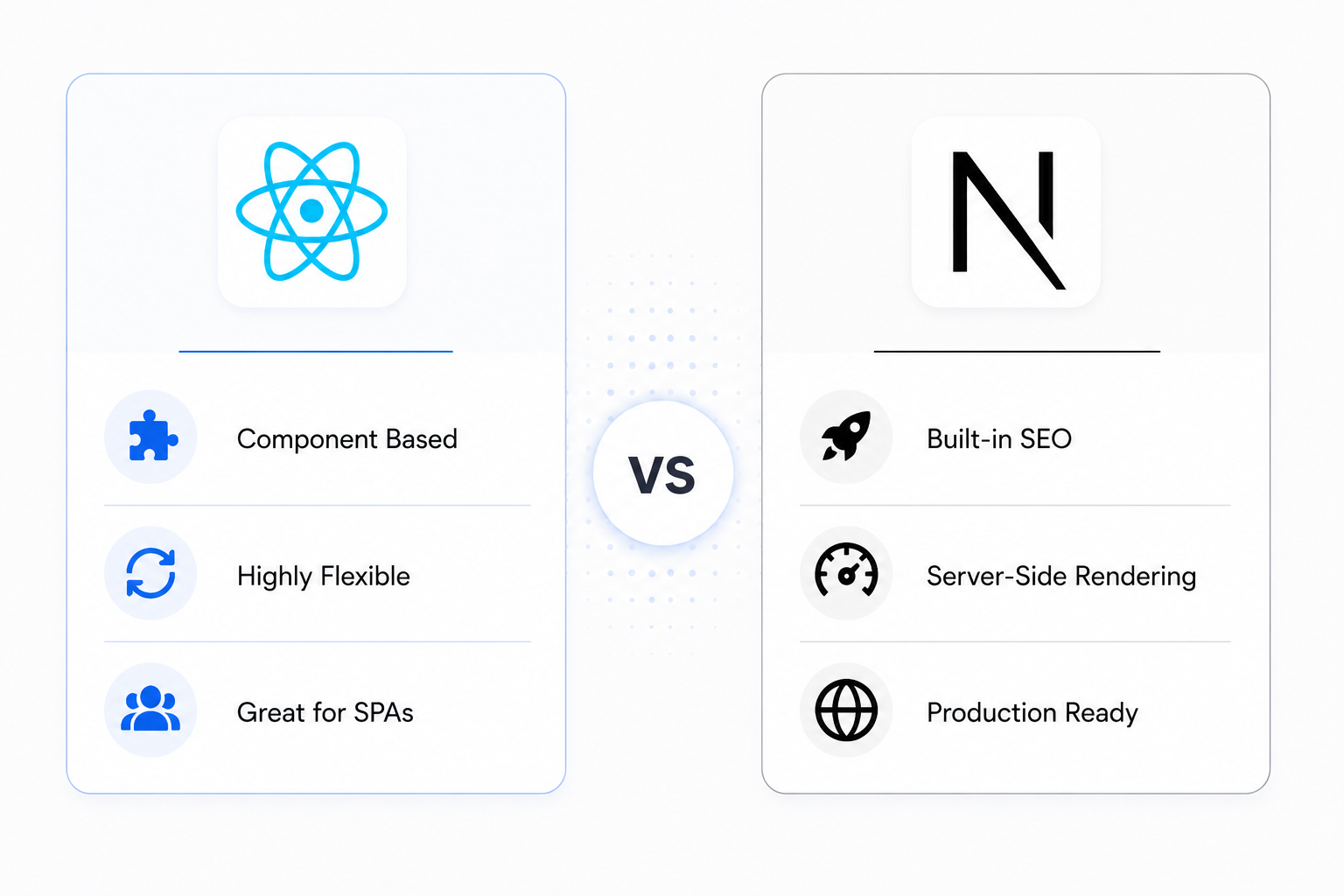
React is an open-source JavaScript library used to build interactive and dynamic user interfaces. It allows developers to create reusable components, making websites faster, easier to maintain, and highly scalable.
React is widely used for building:
- Business websites
- Dashboards
- Web applications
- SaaS platforms
- Customer portals
Benefits of React
- Fast and interactive user interface
- Reusable components
- Easy to scale
- Large developer community
- Excellent flexibility
React is an excellent choice for projects that require dynamic content, interactive user experiences, and long-term scalability.
What Is Next.js?
Next.js is a powerful framework built on top of React. It includes several built-in features that help developers create fast, secure, and SEO-friendly websites without additional configuration.
Some of its key features include:
- Server-Side Rendering (SSR)
- Static Site Generation (SSG)
- Automatic Image Optimisation
- File-Based Routing
- Improved Performance
- Built-in SEO Features
Because of these capabilities, Next.js has become a popular choice for business websites that need excellent performance and better search engine visibility.
React vs Next.js: Key Differences
| Feature | React | Next.js |
|---|---|---|
| SEO | Requires additional setup | Built with SEO in mind |
| Performance | Fast | Faster with built-in optimisation |
| Routing | Manual configuration | Automatic file-based routing |
| Image Optimisation | Requires additional libraries | Built-in image optimisation |
| Server-Side Rendering | Not included | Included |
| Static Site Generation | Not included | Included |
| Development Speed | Flexible | Faster for many projects |
Which One Is Better for SEO?
If your goal is to improve search engine visibility, Next.js is generally the better choice.
Next.js supports Server-Side Rendering (SSR) and Static Site Generation (SSG), allowing search engines to crawl and index your content more efficiently. These features can improve page speed, indexing, and overall SEO performance.
React websites can also rank well on Google, but they usually require additional optimisation and configuration to achieve similar SEO results.
Which Framework Offers Better Performance?
Both React and Next.js deliver excellent performance when developed correctly. However, Next.js includes several built-in optimisation features that improve loading speed and user experience.
- Automatic Code Splitting
- Image Optimisation
- Lazy Loading
- Faster Page Rendering
These features help improve Core Web Vitals, resulting in faster websites and a better experience for your visitors.
Which Framework Is Easier to Scale?
As your business grows, your website should be able to grow with it.
Both React and Next.js support scalable development, but Next.js provides a more structured architecture that makes large projects easier to manage over time.
For enterprise websites, SaaS platforms, and growing businesses, this often becomes a significant advantage.
Which Framework Should You Choose?
The right framework depends on your business goals and project requirements.
Choose React If:
- You’re building a highly interactive web application.
- You need complete development flexibility.
- Your project doesn’t rely heavily on organic search traffic.
Choose Next.js If:
- SEO is a priority.
- Website speed is important.
- You want better Core Web Vitals.
- You’re building a business website or eCommerce platform.
- You need faster page loading and improved user experience.
React vs Next.js: Which Is Best for Business Websites?
For most business websites, Next.js is the preferred choice because it combines modern development practices, excellent performance, and strong SEO capabilities.
If your goal is to attract more visitors through Google while delivering a fast browsing experience, Next.js offers several built-in advantages.
React remains an excellent choice for highly interactive web applications where SEO is less critical.
How ZillionEra Can Help
Choosing the right technology is only the first step.
At ZillionEra, we build custom front-end solutions using React, Next.js, and other modern technologies based on your business goals. Whether you need a corporate website, SaaS platform, or custom web application, our developers create responsive, scalable, and SEO-friendly solutions that support long-term business growth.
Final Thoughts
Both React and Next.js are powerful technologies trusted by businesses worldwide. The right choice depends on your project requirements, performance expectations, and long-term goals.
If you’re unsure which framework is right for your business, partnering with an experienced front-end development company can help you make the right decision and build a solution that’s ready for future growth.