
 50
50  0
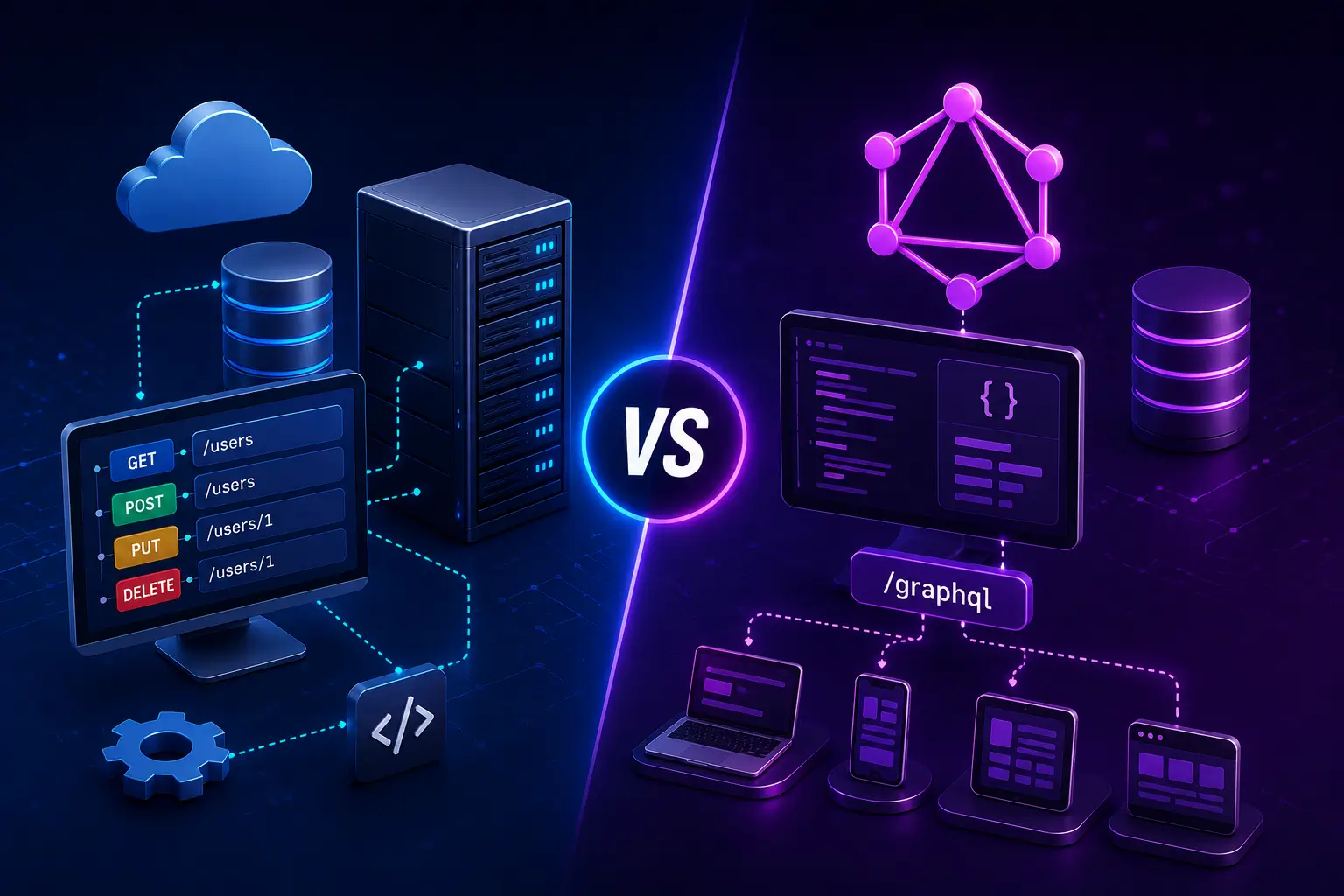
0 APIs play a crucial role in modern software development by enabling communication between applications, websites, mobile apps, and third-party services. Two of the most widely used API architectures today are REST API and GraphQL.
Both approaches help developers exchange data efficiently, but they differ in how data is requested, delivered, and managed. Choosing the right API architecture can improve application performance, scalability, and developer productivity.
In this guide, we’ll compare REST API and GraphQL to help you determine which solution is best for your next project.
What Is a REST API?
A REST API (Representational State Transfer) is a widely adopted architectural style that allows applications to communicate using standard HTTP methods such as GET, POST, PUT, and DELETE. It organizes data into multiple endpoints, with each endpoint serving a specific resource.
Key Features
- Standard HTTP methods
- Resource-based endpoints
- Easy to understand
- Stateless architecture
- Broad framework support
Best Use Cases
- Business websites
- CRM and ERP systems
- eCommerce platforms
- Mobile applications
- Third-party integrations
What Is GraphQL?
GraphQL is a modern query language for APIs developed by Meta. Unlike REST, GraphQL uses a single endpoint and allows clients to request only the data they need.
This reduces unnecessary data transfer and improves performance, especially for applications with complex data requirements.
Key Features
- Single API endpoint
- Flexible queries
- Fetch only required data
- Strongly typed schema
- Real-time capabilities through subscriptions
Best Use Cases
- SaaS platforms
- Enterprise applications
- Mobile apps
- Dashboards
- Real-time applications
- Complex data relationships
REST API vs GraphQL Comparison
| Feature | REST API | GraphQL |
|---|---|---|
| Architecture | Multiple Endpoints | Single Endpoint |
| Data Fetching | Fixed Responses | Flexible Queries |
| Performance | Excellent | Excellent for complex data |
| Scalability | High | Very High |
| Learning Curve | Easier | Moderate |
| Caching | Native HTTP Caching | Custom Caching |
| Real-Time Support | Limited | Built-in via Subscriptions |
| Mobile Performance | Good | Excellent |
| API Versioning | Often Required | Usually Not Required |
| Development Speed | Fast | Faster for complex applications |
Advantages of REST API
REST remains one of the most reliable API architectures because it is simple, stable, and widely supported.
Benefits include:
- Easy implementation
- Excellent documentation
- Strong caching support
- Large developer community
- Mature ecosystem
- Easy maintenance
Advantages of GraphQL
GraphQL provides greater flexibility for modern applications that require multiple data sources.
Benefits include:
- Reduced network requests
- Faster data retrieval
- Better mobile performance
- Flexible queries
- Improved developer productivity
- Easier front-end integration
Which One Offers Better Performance?
For simple applications, REST APIs often perform exceptionally well and are easier to cache.
For applications requiring multiple related datasets, GraphQL reduces unnecessary requests by allowing clients to retrieve all required information in a single query, improving efficiency and reducing latency.
Which Is Better for Mobile Applications?
Mobile applications benefit greatly from GraphQL because it minimizes data usage and reduces the number of API calls.
However, REST remains an excellent choice for straightforward mobile applications with predictable data requirements.
Which Is Easier to Scale?
Both REST API and GraphQL can scale effectively when designed correctly.
REST APIs are easier to manage for traditional applications, while GraphQL offers greater flexibility for enterprise systems, SaaS platforms, and applications with rapidly changing data needs.
REST API vs GraphQL: Which Should You Choose?
Choose REST API if you need:
- Business websites
- Standard CRUD applications
- Stable APIs
- Easy maintenance
- Third-party integrations
Choose GraphQL if you need:
- SaaS platforms
- Complex dashboards
- Mobile applications
- Multiple frontend clients
- Real-time applications
- High-performance data retrieval
The right choice depends on your application’s architecture, business goals, and long-term scalability requirements.
How ZillionEra Can Help
At ZillionEra, we build secure, scalable, and high-performance APIs using REST API, GraphQL, Laravel, Node.js, PHP, Python, and modern cloud technologies. Whether you’re developing a custom web application, SaaS platform, mobile app, or enterprise solution, our team designs API architectures that are optimized for performance, security, and future growth.
Final Thoughts
REST API and GraphQL are both excellent technologies for building modern applications. REST offers simplicity and broad compatibility, while GraphQL provides flexibility and efficient data fetching for complex systems.
Choosing the right API architecture depends on your project requirements, scalability goals, and development strategy. Working with experienced back-end developers ensures your application is built on a reliable foundation that supports long-term success.